Maksym Kozachenko · Senior full-stack engineer

I build the whole thing.

Backend, frontend, mobile, infrastructure, and the decisions in between. Fourteen years of shipping, eight of them as a CTO. I write the code and I read the P&L.

Back to the interactive circuit
Motion stays reduced.

Before the lap · Briefing

Hi. I'm Max.

A developer who ended up running a company, then came back to the keyboard on purpose.

14
years shipping
10
products on this lap
30+
people led as CTO

I wrote my first production code in 2012: C inside Asterisk, running the voice menus of a cellular carrier. I patched a memory leak in the PBX source and recompiled it, which taught me more about computers than any lecture. As a junior I built a hotel booking engine and, yes, an infinite scroll in jQuery. Then came PHP, Node.js, and TypeScript everywhere, with Swift, Kotlin, React Native, and a stretch of embedded work along the way. I co-founded a software company, ran it as CTO for the better part of a decade, and grew it past thirty people. In 2022 I went independent to get back to building. This lap is the proof: ten products, five things I can do for you, and the person behind them. Scroll on.

10 case studies

Selected work

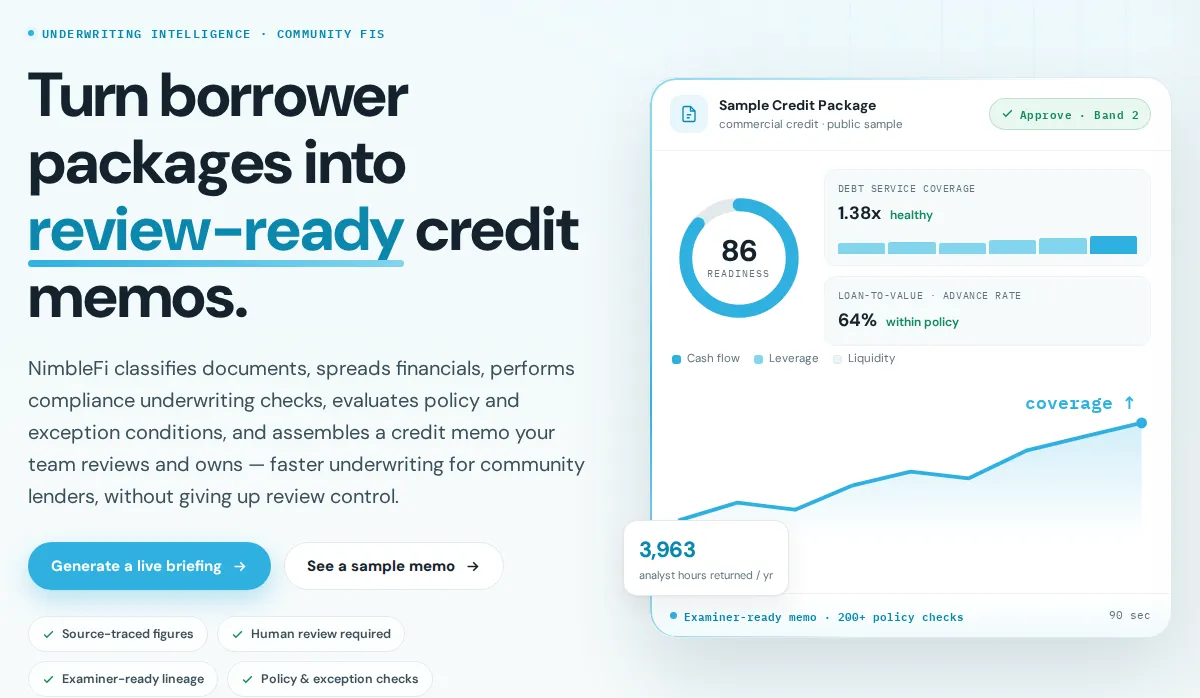
NimbleFi home page with a sample credit package showing a readiness score, coverage ratios, and a coverage chart
The NimbleFi front page. The engine behind it is what I built.

Case 01 · Fintech

NimbleFi

An underwriting engine for community banks: borrower package in, review-ready credit memo out.

I built the underwriting system behind NimbleFi, a product for community banks and credit unions. A loan officer drops a borrower package on it. The system recognises the documents, spreads the financials, runs the policy and covenant checks, and assembles a credit memo that a human reviews and signs. Every number in the memo links back to the page it came from, so an examiner can follow it.

Role
Developer
Year
Now

Work covered

  • Identifies the document types in a borrower package
  • Spreads the financials and benchmarks them against peers
  • Runs the policy and covenant checks automatically
  • Assembles a memo a human reviews, with every figure linked to its source
  • Document ingestion
  • Financial spreading
  • Policy checks
  • Credit memos
  • Source lineage
  • Banking
Visit NimbleFi
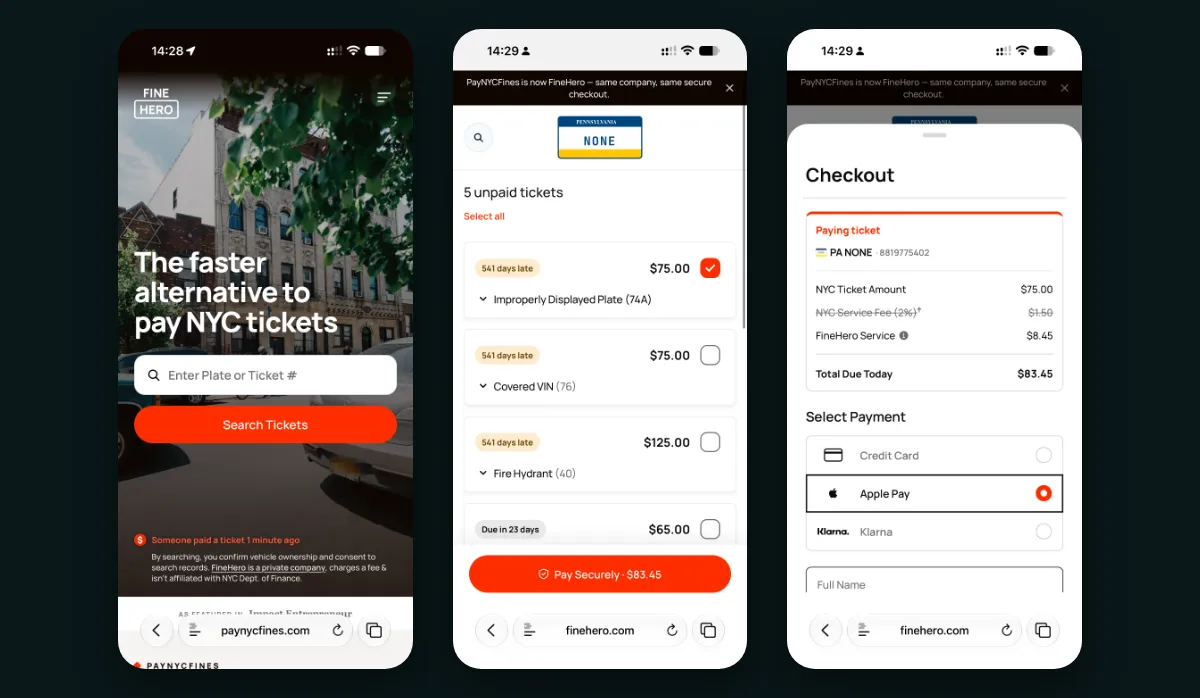
Three PayNYCFines phone screens: plate search, a list of unpaid tickets, and checkout
Plate search, ticket list, and checkout. The product now runs as FineHero.

Case 02 · Payments

PayNYCFines

A shorter, clearer way for New Yorkers to find and pay parking tickets.

2 wks
to first paid ticket
6 mo
to break-even
$5M+
paid through it yearly

I started PayNYCFines from an empty repository, and two weeks later the first ticket was paid through it. Paying a fine in New York used to mean a government form with a dozen fields. I cut it to one: plate or ticket number. Then a list of what you owe, then a checkout that takes about a minute. The business broke even in six months and passed $1M in paid tickets in nine. It runs as FineHero today, on the Kubernetes setup I built, autoscaling through the busy days and handling more than $5M a year in payments without anyone touching the infrastructure. Vue and Vuetify up front, NestJS and MongoDB behind, Twilio for the text alerts, Stripe for the money.

Role
Lead developer
Year
2022–2024

Work covered

  • Two weeks from an empty repository to the first paid ticket
  • One search field instead of a long government form
  • Break-even in six months, $1M in paid tickets within nine
  • Over $5M a year on the same infrastructure, unchanged
  • TypeScript
  • Vue
  • Vuetify
  • NestJS
  • MongoDB
  • Twilio
  • Stripe
  • Kubernetes
  • CI/CD
Visit PayNYCFines
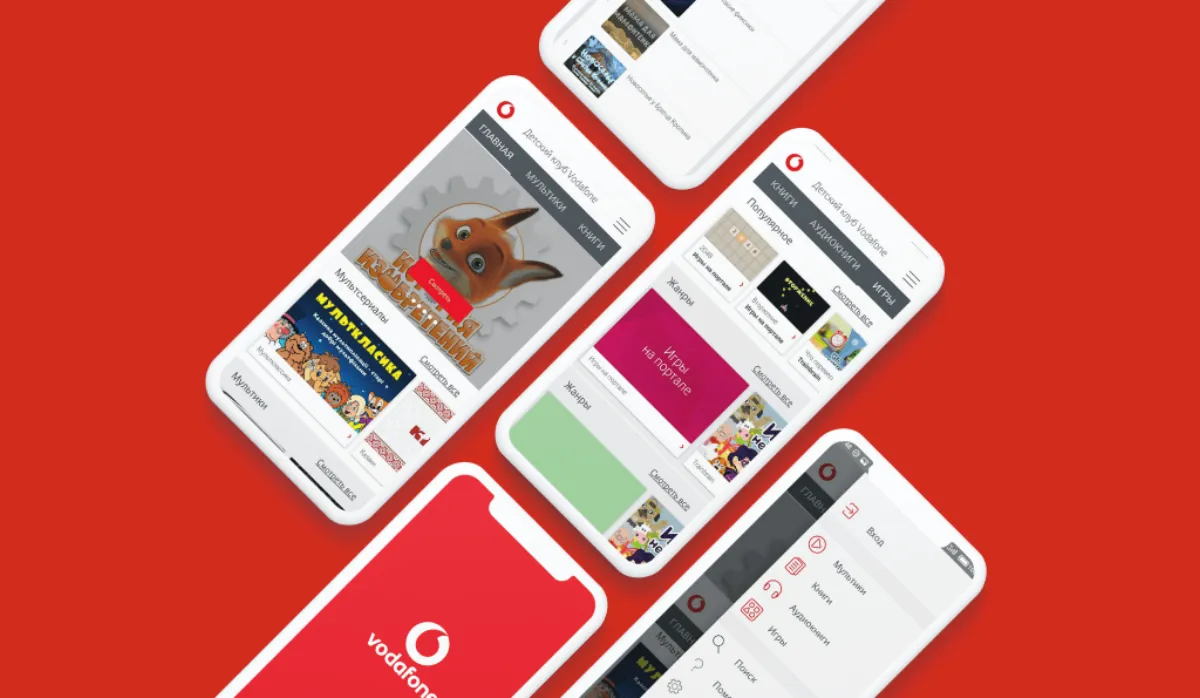
Kids app screens on phones over a red background: cartoons, books, audiobooks, games, and the side menu
Cartoons, audiobooks, ebooks, and games in the kids app

Case 03 · Mobile

Kids app for a cellular carrier

Cartoons, audiobooks, ebooks, and games for children, in one carrier subscription.

I was technical lead on a children's club app for a national cellular carrier, sold to parents as a subscription. The brief sounds simple until you watch a five-year-old use a phone. I built it in React Native with one navigation model across cartoons, audiobooks, ebooks, and small games, so a child moves between media types without relearning the interface, and a parent can trust what is behind the icons.

Role
Technical lead
Year
2019

Work covered

  • One navigation model across four media types
  • Age-aware content for parents and children
  • Subscription product for a cellular carrier
  • React Native
  • TypeScript
  • iOS
  • Android
  • Mobile UX
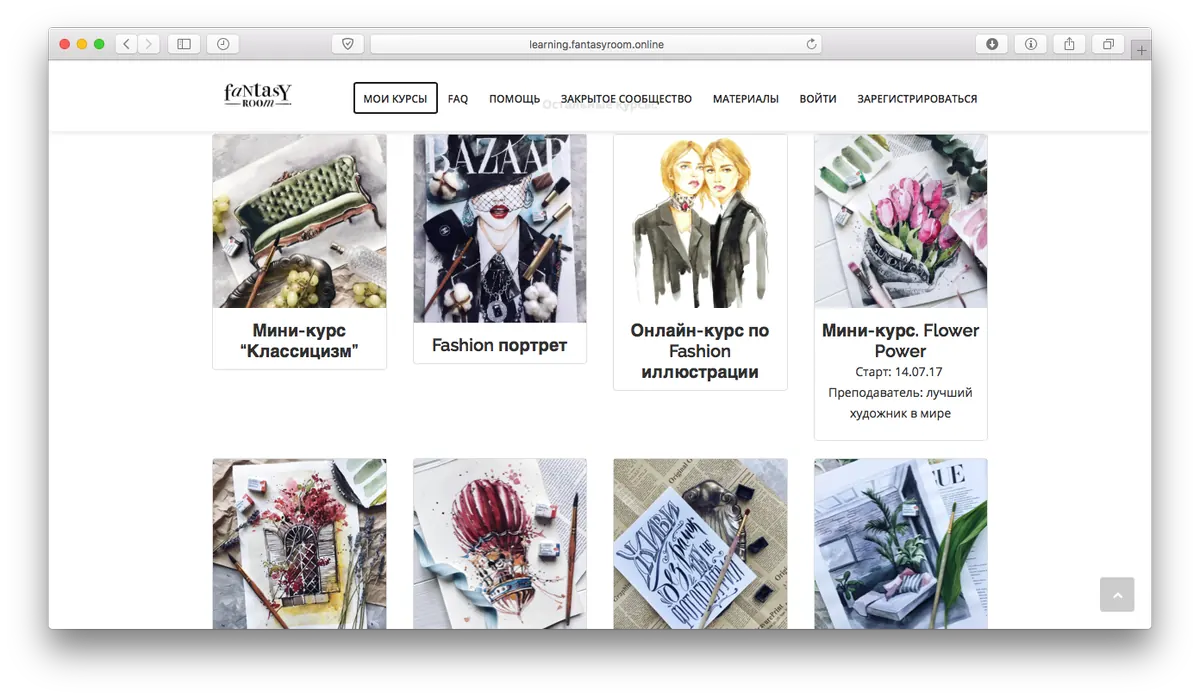
Learning platform page showing a grid of illustrated fashion and art courses
Course catalogue from the delivered platform

Case 04 · Education

White-label learning platform

One course system, adaptable to the identity and needs of each school.

I was technical lead on a platform for course delivery, assessments, student tracking, and school-specific branding. The trick was making one codebase serve several schools that each wanted to look like their own product. I designed it so every branded school runs from the same system, with the learning interface and the operational tools together, and a new school is a configuration, not a fork.

Role
Technical lead
Year
2018

Work covered

  • White-label school configuration
  • Course, assessment, and progress workflows
  • Shared platform with school-specific branding
  • Vue
  • PHP
  • Yii2
  • Docker
  • MariaDB
  • CI/CD
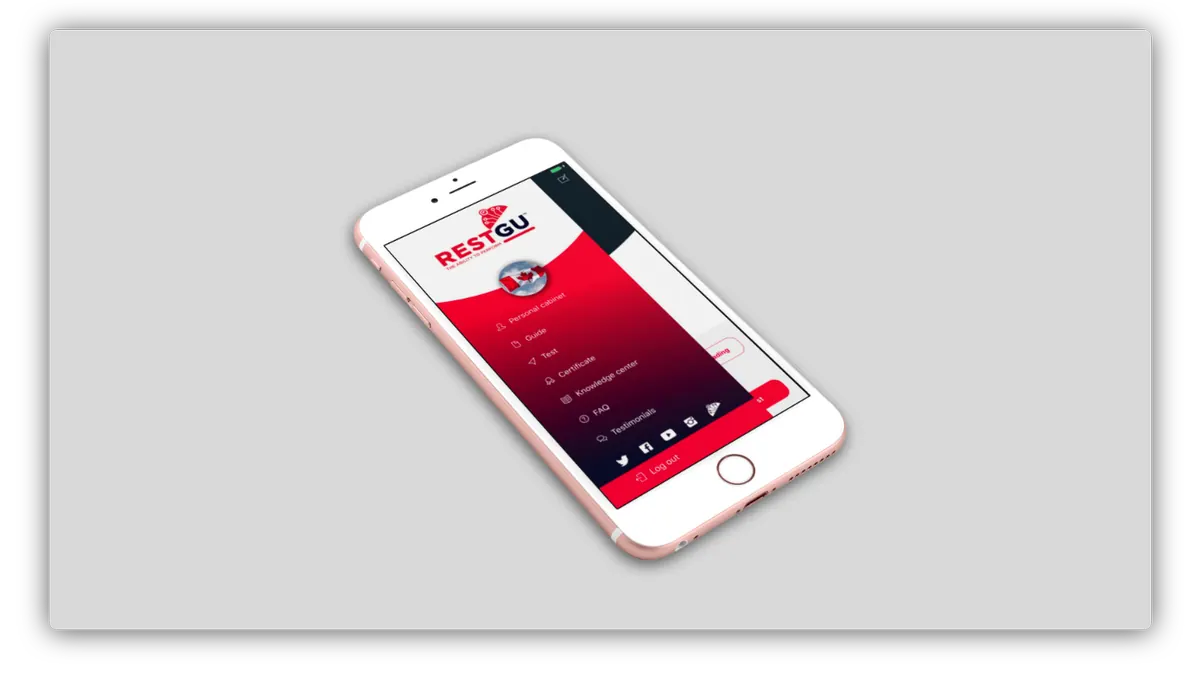
RestGu iOS app screen with guide, test, certificate, and knowledge centre links
RestGu iOS interface

Case 05 · Hospitality

RestGu

Mobile training and certification for restaurant teams.

I built this iOS app for restaurant training and certification. Staff read the guide, take a test, and get a certificate, with a knowledge centre for the reference material they need on shift. It had to work with one hand, between tables, on a phone that had been dropped a few times.

Role
Developer
Year
By 2018

Work covered

  • Restaurant training
  • Certification
  • iOS app
  • iOS
  • Training
  • Hospitality
FantasyRoom art and fashion school website home page
FantasyRoom website

Case 06 · Education

FantasyRoom

A web presence for an international art and fashion school.

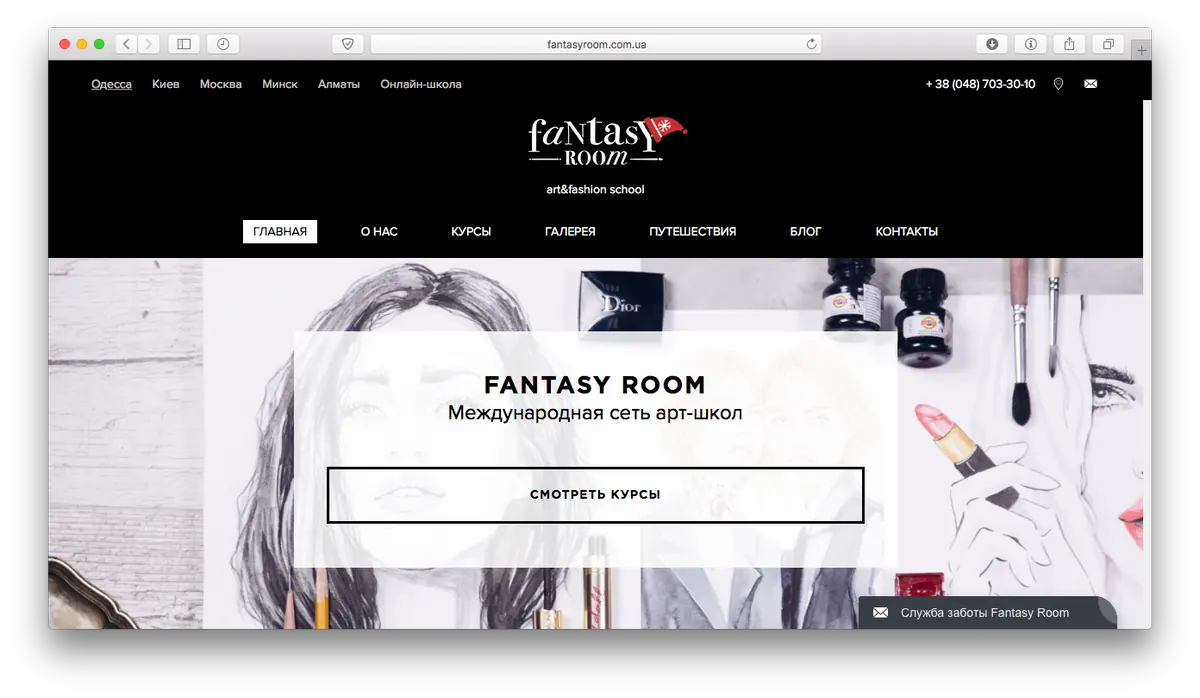
I managed most of the work on this multisite web project for an international education organisation, an art and fashion school that runs several branded sites from one setup. I set the direction and reviewed the build rather than writing every line myself, which was the point: by then I was hiring the people who wrote the lines.

Role
Project lead
Year
By 2018

Work covered

  • International education project
  • Multisite web project
  • Web development
  • Web
  • Multisite
  • Education
PromiseMe iOS profile screen with kept and failed promise totals
PromiseMe iOS interface

Case 07 · Social mobile

PromiseMe

A social app for making a promise, tracking it, and sharing the result.

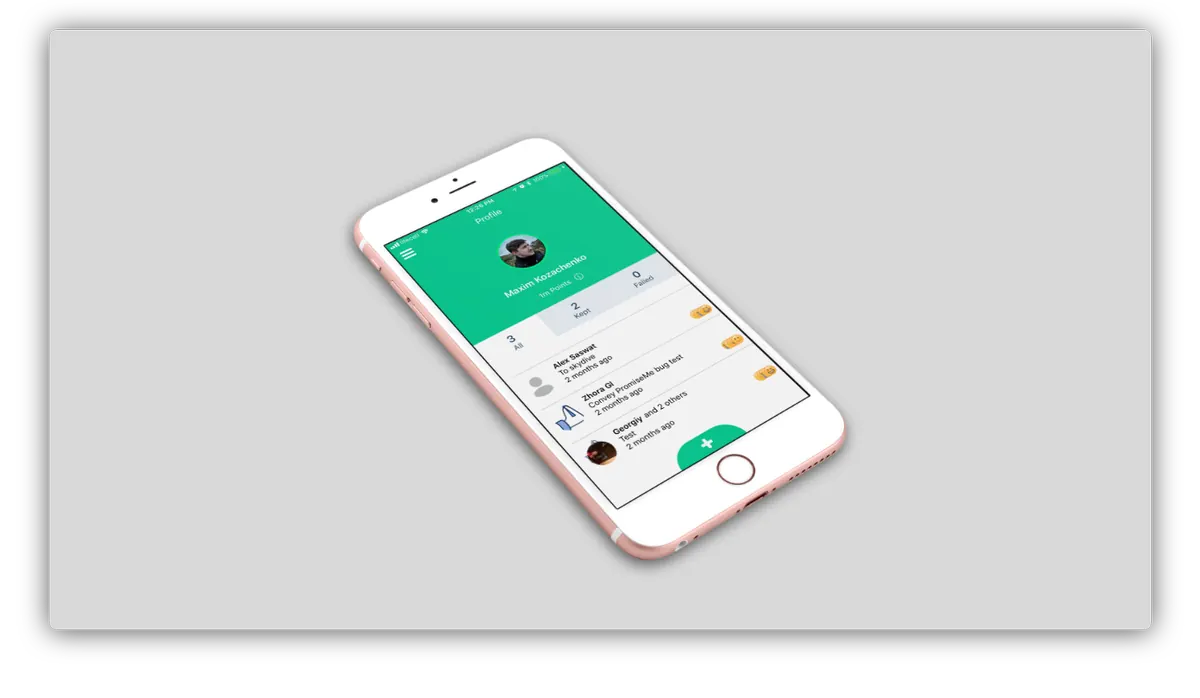
I built this iOS app for a promise-making and tracking social platform. A user makes a promise, tracks it to the deadline, and shares the kept or failed result with friends. Small product, honest mechanic: the app does not let you quietly forget.

Role
Developer
Year
By 2018

Work covered

  • Promise making
  • Promise tracking
  • Social platform
  • iOS
  • Social product
  • Mobile UX
Initia Events website with a geometric event image and service navigation
Initia Events website

Case 08 · Events

Initia Events

A confident digital front door for an events company.

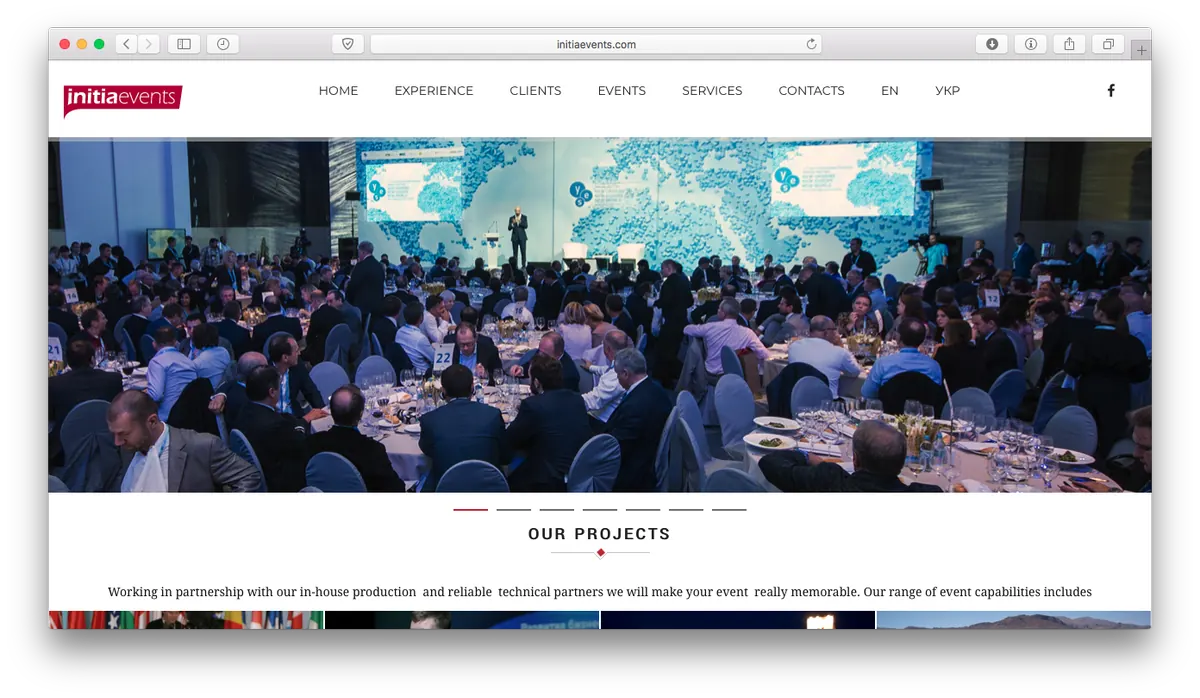
I built the company website for Initia Events. It opens with a service overview, shows a gallery of past event work, and gives clients a clear route to the contact page. An events company sells trust in advance, so the site had to look like the events do.

Role
Developer
Year
By 2018

Work covered

  • Service overview
  • Event work
  • Client and contact routes
  • Web
  • Events
  • Brand system
Azurdome responsive website showing a geodesic event structure and product navigation
Azurdome website

Case 09 · Product catalogue

Azurdome

A product-led website for geodesic event structures.

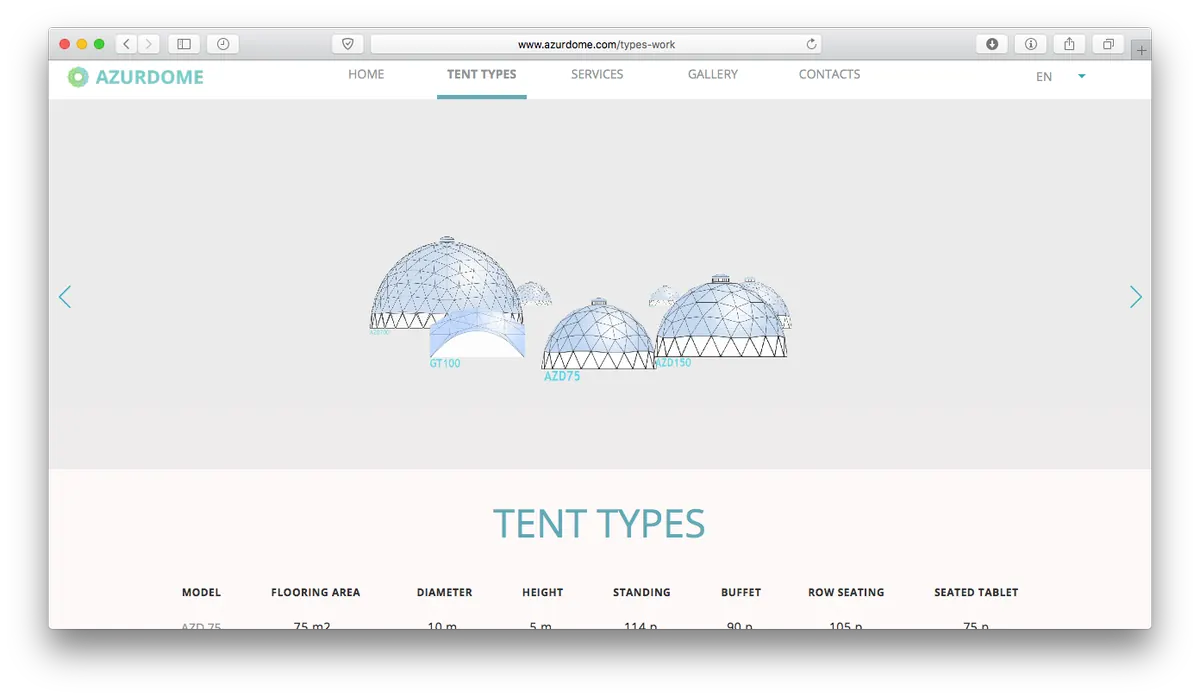
I managed this build as CTO. The site is a product catalogue for the Azurdome tent-rental business, with specifications for each geodesic structure, service pages, and a gallery of past events. The client rents very large tents, so the pictures had to do most of the talking.

Role
CTO
Year
By 2018

Work covered

  • Tent catalogue
  • Specifications
  • Service and gallery pages
  • Web
  • Product catalogue
  • Responsive UI
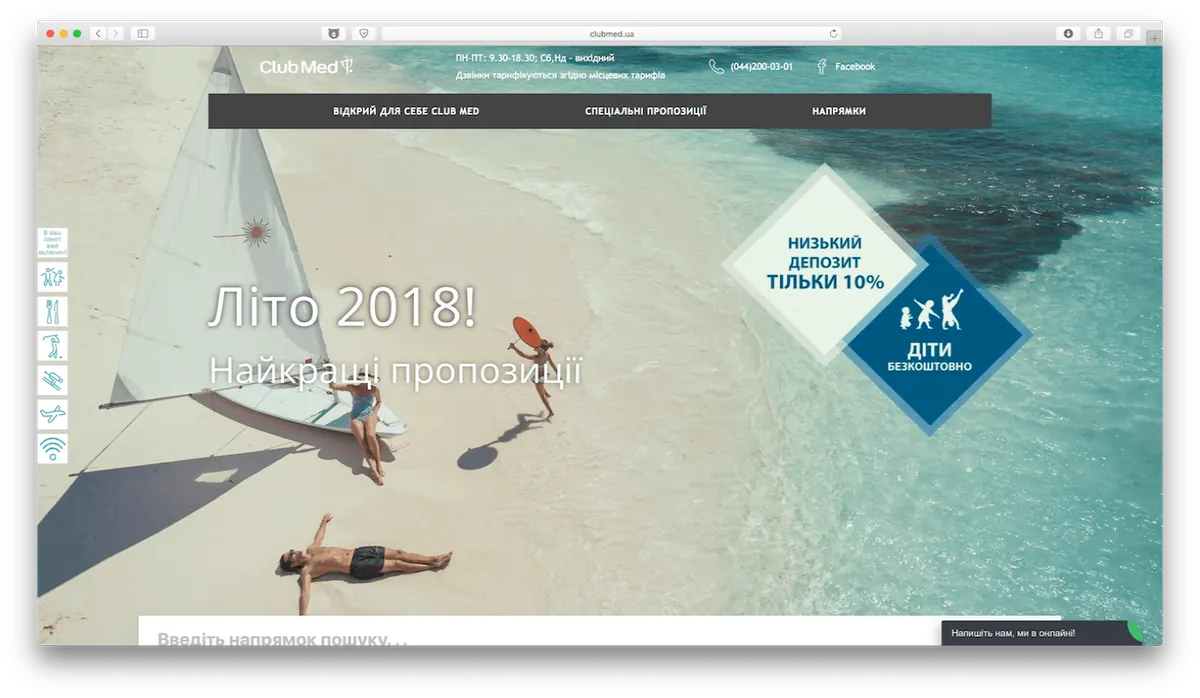
Club Med Ukraine website home page with summer 2018 promotion
Club Med Ukraine website

Case 10 · Travel

Club Med Ukraine

A website for the Ukrainian branch of an international premium-resort travel company.

I built the Ukrainian branch website for Club Med, the international premium-resort travel company. The site carried seasonal offers for the local market, such as the summer 2018 promotion on the home page, inside a global brand that does not bend its rules for a regional office.

Role
Developer
Year
By 2018

Work covered

  • Ukrainian branch website
  • Premium-resort travel company
  • Web development
  • Web
  • Travel
  • Responsive UI

Skills lane · Overview

What I actually do.

Five things I can do for a startup, in the order I would sell them.

Engineering first, because that is what I do every day. Mobile, because I have shipped to both stores more than once. Then the three things that came from running a company: deciding what to build and how, designing how it feels, and leading the people who build it. Most engineers can do one of these. I have had to do all five on the same Tuesday. Keep scrolling and I will stop at each one.

Skill 01 · Engineering

Full-stack, for real.

Fourteen years across the stack. I pick the tool for the job, not the one from the last job.

Most of my recent work is TypeScript on both sides: Node.js with NestJS or Express behind, Vue, Nuxt, React, and Next.js in front, REST, GraphQL, and tRPC between them. Before that, years of PHP with Laravel and Yii2, and some Go where it earned its place. I have written C and C++, shipped C#, done a stretch of embedded work, and I can read assembler when a profiler sends me there. On the infrastructure side I run Docker, Kubernetes, autoscaling, and CI/CD pipelines that I set up myself, because the person who built the app should know how it deploys. I have also done 3D on the web with Three.js. You are looking at some of it.

  • TypeScript, Node.js, and NestJS on the back end
  • Vue, Nuxt, React, and Next.js on the front end
  • PHP, Go, Java, C, C++, and C# when the job asks for them
  • Kubernetes, Docker, CI/CD, and autoscaling I run myself
  • TypeScript
  • Node.js
  • NestJS
  • Vue
  • Nuxt
  • React
  • Next.js
  • PHP
  • Go
  • C / C++
  • C#
  • Java
  • GraphQL
  • tRPC
  • Kubernetes
  • Docker
  • CI/CD
  • Three.js

Skill 02 · Mobile

Both stores, more than once.

Apps for iOS and Android, from cross-platform builds to store release.

I published my first apps to the App Store and Google Play as a cross-platform mobile developer and have kept a hand in mobile since. I led the React Native build of a kids content app for a national cellular carrier, and earlier I shipped iOS apps for restaurant training and for a social promise tracker. I write Swift and Kotlin when native is the right answer, and I know where cross-platform saves months and where it costs you a year later. That second part is the question most startups actually need answered.

  • React Native lead on a carrier subscription app
  • iOS apps published to the App Store
  • Swift and Kotlin when native is the right answer
  • Store release and review process, both platforms
  • React Native
  • Swift
  • Kotlin
  • iOS
  • Android
  • Ionic
  • Mobile UX

Skill 03 · Architecture and product

What to build, and how.

I turn a tangled idea into a system a team can build and a customer can understand.

Before code I want three things: what the first release must do, what it must not do yet, and how the system will be shaped so the second release does not mean a rewrite. That means discovery calls, a map of the user journey, an architecture that matches the team you actually have, and a written plan the engineers build from. On PayNYCFines it meant one search field instead of a long form, a checkout that takes about a minute, and infrastructure that has not needed a change in two years. The business broke even in six months.

  • Discovery calls and a map of the user journey
  • Scope cut to the first release that pays for itself
  • Architecture sized for the team you have, not the one you want
  • Roadmaps tied to revenue, not to feature counts
  • Architecture
  • Scope
  • Discovery
  • Estimates
  • Roadmaps
  • Written briefs

Skill 04 · UI/UX

Interfaces people get on the first try.

User flows, screens, and prototypes, designed by the engineer who builds them.

I design the user flow first, then the screens, then a clickable prototype that the team and the first users can react to. I keep interfaces sparse: one clear action per screen, plain labels, and no field the product can work out on its own. For products that will grow, I set up a design system so new screens stay consistent after I leave. The kids app used one navigation model across four media types for that reason. I am an engineer who designs, which means the prototype and the production build are usually the same person's problem.

  • User flows before pixels
  • Clickable prototypes for early feedback
  • One clear action per screen
  • Design systems that keep new screens consistent
  • UI design
  • UX
  • User flows
  • Prototyping
  • Design systems
  • Mobile UX

Skill 05 · Leadership

I have sat on the other side of the table.

I have run engineering teams and know what a plan looks like from the founder's chair.

I was CTO and co-founder of a software company for the better part of a decade. I built the first projects myself, then hired and grew the team to more than thirty people, and shipped products for a national cellular carrier and for smaller companies in several industries. I left management to get closer to the product again, and that is the view I bring to a startup now: I can tell a founder what the engineers need, and tell the engineers what the founder means. I also know what a bad hire costs, because I have made one.

  • CTO and co-founder of a software company
  • Grew a team from one person to more than thirty
  • Technical lead on carrier and education products
  • Hiring, estimates, and delivery plans that hold
  • Team leadership
  • Hiring
  • Estimates
  • Architecture review
  • Delivery planning

About lane · Overview

The person behind the commits.

Where I came from, what I studied, and what I do when the laptop is closed.

Three short stops. How I got from a carrier's voice menus to building products for startups. Where the two engineering degrees came from and why they still matter. And the part of my life that explains why this portfolio is a racing circuit and not a list.

About 01 · Path

How I got here.

I started as a developer, ran a company, and came back to the part I like most: building the thing.

I wrote my first production code in 2012, on the voice menus of a cellular carrier, and spent the next years as a full-stack developer on web and mobile products. Then I co-founded a software company and ran it as CTO, until I found I preferred building products to running payroll. I have worked independently since 2022, as a senior engineer who can also take the product and the team off a founder's plate. I work remotely, in English or Ukrainian.

  • 2012: first production code, on the voice menus of a cellular carrier
  • Full-stack developer on web and mobile, then CTO and co-founder
  • Independent since 2022, senior engineer with a founder's view
  • Remote, in English or Ukrainian

About 02 · Education

Software engineering, studied properly.

A Bachelor's and a Master's degree in software engineering from Kyiv Polytechnic Institute.

I studied at Kyiv Polytechnic Institute from 2011 to 2017: a Bachelor of Technology in software engineering in 2015, then a Master's degree in software engineering in 2017. The formal grounding matters less than people think and more than they admit. It is why I can read a systems design, question an estimate, and spot the corner a team is about to paint itself into. It is also why I was writing C for a carrier's voice menus at nineteen.

  • Master's degree in software engineering, 2017
  • Bachelor of Technology in software engineering, 2015
  • Kyiv Polytechnic Institute, 2011 to 2017

About 03 · Off the track

Curious by default. Precise when it counts.

Most of what I do off the clock involves speed, water, or the sky.

Away from work I am an Advanced scuba diver, a Junior Sailor, a flight/sim racing enthusiast, a petrol head, a Formula 1 lover, and a gamer. I love skiing and snowboarding, and I am into guitar, geek culture, aviation, science, and astronomy. The circuit you are driving is not a coincidence. I built it because I wanted to drive it.

  • Advanced scuba diver
  • Junior Sailor
  • Flight and sim racing enthusiast
  • Petrol head and Formula 1 lover
  • Gamer
  • Skiing and snowboarding
  • Guitar, aviation, science, and astronomy

Contact lane

Bring the difficult part.

If you need something built, fixed, or decided, tell me what is getting in the way. The best first message has a link, a problem, and a date, and email is the place to send it. My work history is on LinkedIn and some of my code is on GitHub. I answer every message myself.